Now that we have the concept of the dungeon we want, we can now start brainstorming what will be going in it. Usually this involves tricks, traps, monsters, specials, challenges, loot and magic items. You could of course, skip this section and figure it out as you map the dungeon (I know I have done this) and determine randomly how to stock your dungeon. However, writing these aspects of a dungeon down on a sheet of paper and referring to it as you stock your dungeon will give your dungeon a sense of consistency, theme and personality, it what will make the dungeon itself iconic. You may want to have some tools at the ready such as the AD&D Dungeon Master Guide (or OSRIC) or the D&D 5e Dungeon Master Guide to assist you in the creation and ideas of traps and tricks.
The Monsters.
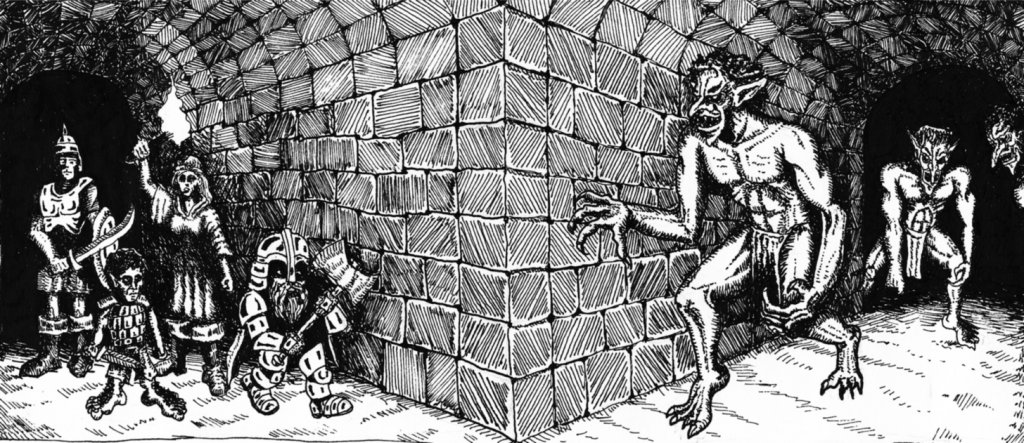
The monster you pick for your adventure will define the dungeon, and will give you an idea of what is in it. The B/X book advises you to select special monsters and not to roll for them or pick them out at random. The monster you pick are the new residents of the dungeon, perhaps a small tribe of orcs has taken up an area of the dungeon and made it their lair or outpost for raiding the nearby settlements, perhaps the dungeon’s denizens are zombies and skeletons who were cursed to be returned to the land of the living to guard the dark secrets of a necromancer. The special monster your pick will define the area in its current state. I would advise selecting one or two special monster. The other monsters that are not residents but wanderers are that, wandering monsters, creatures that just dwell the halls who possibly come from a different level or have their own lair somewhere else not in the dungeon. My usual wandering monster list are 6 monsters, one or two being special monster, the rest just wandering monster level or CR appropriate.
Traps.
Select the traps you want to see in a place like this, if there are any. What kind of traps would be found in the tomb of an ancient undead mummy lord? Why does he have these traps here? Traps should be there to keep your players on their toes and pay attention to their surroundings to avoid the traps. Traps can also vary in lethality, from non-lethal to deadly and this will come down to taste. I would have a list of possible trap that you would like to see in the dungeon.
Tricks.

The other side of the coin of the trap. Tricks are, as the name implies, to trick or subvert the expectation of what the players believe was going to happen. It doesn’t have to be a surprise, sometimes it can be obvious that the trick is a trick, for example magical pools that have an effect after drinking it. They don’t know what will happen or what they think could happen doesn’t happen. Tricks can add the weirdness to your games, playing around with magical effects mess with the architecture of the dungeon, riddles, and puzzles can qualify here as well. Create a list of these tricks to go along with the theme of the dungeon.
Special.
Theses room are where you place something of meaning, it has more details that empty rooms and could imply a hint or clue to the players about the traps, monsters, tricks and general lore of your dungeon. You can add any detail you like here. You could also decide to place environmental hazards or challenges here along with possible social encounters as well. A chasm that leads to a dark abyss, how will they cross? A room filled with lava with a stone bridge, how can they use it to their advantage? A Djinn trapped in a bottle, how do the players interact with it.
Empty.
These rooms are empty. There is the argument that there shouldn’t be any truly empty rooms, and although that is true, giving every room in-depth detail will cause two things: The first being, that if every room is overly detailed, then players will assume all rooms are important or that all rooms are non-important. Second, and it comes down to taste, but in an abandoned dungeon that has been in ruins for centuries, you wouldn’t find that many furniture or things left in it. Could be because the furniture was sacked years ago; destroyed by current oversized denizens; or just rotten and destroyed, the details unimportant. People will argue “Well, if the dungeon Is a place where people live, where do they have X or where do they have Y and how do they do Z” and yes those people would be correct, if it wasn’t for the issue that people don’t regularly live in decrepit tombs and ruins; if they did they would have small out post and lairs and those areas would have storage, beds, provisions etc.
You could imply the original purpose of the room of course, and again, you can also ignore this advice and continue forth with adding as much detail as you want to these room. But for those who rather not bother giving details to these rooms because perhaps you are building a mega dungeon, roll or pick on the dungeon dressing table and place it in that room, players will use those details as landmarks.
Treasure.
Finally we have treasure. Treasure can be important or unimportant depending on the style of game you are running. If you are running a Sword and Sorcery old school game where treasure equals experience points then yes treasure is important. If you are running a heroic fantasy game where experience is gained through accomplishing heroic acts and playing out an entire adventure, then treasure is secondary and perhaps just a commodity that does not have any mechanical impact in your game. Whichever the case, dungeon need some kind of treasure.
Pick out what magic items and amount of treasure you want to assign, independently from any table or procedure you are following and place them either in rooms you consider important or in the lairs of the special monsters. After you have done this, you can roll to see what other places have treasure in the dungeon. I would first write down what is the initial total gold placed in the dungeon (Which could mean the initial total exp) before rolling randomly for treasure placement in different rooms. In what shape or form the treasure comes in is up to you. Coins, books, goods, gems, jewelry etc.
How it should look at the end.
Now continuing with our previous example with the Collapsing keep of the Scarlet Princess we will list out the things we would like to see in the dungeon and define it. This Dungeon is designed for PC level 1-3 using the B/X rules. Ive decided that the reason why the dungeon gets the name “Scarlet” Princess is because when she transformed into a monster she became this plant-like, amphibian creature, with fungi growing on its body and taken over their mind. Some grow Chitinous armor.
Monsters:
Special Monster: Fungal Stalker (personal creation) What the princess and inhabitants turned into and the cause for the ailment, the dungeon is fungi and undead themed.
Wandering Monsters:
Kobold
Giant Spider
Fungal Stalker
Dwarves
Skeletons
Stirges
Traps:
Traps left behind are those made by the dwarves when they used to live here, most traps here are too keep out intruders, or to stop raiders from taking their treasure. Dwarves usually have an alternative pathway or a system to deactivate the traps:
Automatic Crossbow trap, Tripwire
Giant Dwarven statue, 10’ wide, drops from ceiling to squish intruders, Pressure plate
Swinging battle axe set at the side of special doors that require a key.
Trick:
One Way Doors
Falling Block, preventing passage
Exploding Fungi that react with light
Spores that causes magical sleep
Special:
Chapel, hidden/out of the way, dwarven deity
Arena or coliseum of some sort
Tomb of the noble family
Clue regarding exploding fungi
Clue about one way doors
Empty:
Roll for dungeon dressing
Treasure:
1 misc magic item, 1 magic weapon
3,000gp without randomly rolling.
Now that we have this list of things I want in the dungeon, I have a better idea of how I will want certain parts of the layout and what I want to see in the dungeon. We will go ahead tomorrow and follow with part 3 of this series with mapping out the dungeon and determining dungeon size for what we want this adventure to be, a long with the final details about the dungeon, If I see is necessary i will also add my procedure to stock the dungeon.
Introduction
Part 1: The Concept
Part 2: Brainstorming
Part 3: Mapping and Stocking the Dungeon.
 Lair of the Lich